Growing up, Barney the dinosaur was a good role model for what good and bad is for me. I’d often watch him after school and it was a pleasant show to watch. One of the lessons that I remember from Barney is that “Sharing is caring.”

Barney’s lessons on “Sharing is caring” implied to me as a kid that sharing is a moral good. If I had excess of something and I could share it with a fellow kid, I darn better share it with them! Barney, in some sense, helped developed my idea of what good and bad is and defined a moral system for me. But is Barney a valid figure in what determining what good and bad is?
Let’s consider the following example of someone else’s take on Barney:

This is a complete 180 of what I thought about Barney in my childhood. Sure, as I grew older I didn’t have that quite same fondness of him but I definitely did not associate him with Satan. If we take Barney to be Satan or a false prophet, then everything that Barney says would actually be considered bad. Thus, the saying “Sharing is caring” is no longer a moral good–it’s bad.
Which side do we accept then? Do we accept that sharing is a moral good or a moral bad. One thing that I like to point out is that one’s conception of moral has changed based of who we take to be the authority. Nietzsche observed and examine this phenomena of how “good” and “bad” is actually defined based off and explores its origins in his Genealogy of Morals.
The comparison between “good” and “bad” has deeper roots based off of etymology. Nietzsche noticed that the concept of goodness was often associated with the noble, powerful, and those who were privileged. In contrast, the badness of something was often associated with the commoners or the peasants. He notes this in the German vocabulary where words such as “schlect” [bad] are bases for the words “schlicht” [plain, simple] and “schlechterdings” [simply]. Thus, the concept of what something good and bad may be thought as a function what the “noble” or privileged class thinks what inherent goodness is.
In someways, there could be someone using Barney to advance what good and bad means…

As an aside from this weird Barney morality system, Nietzsche also thought that the distinction of what “good” and “evil” is different than the comparison between “good” and “bad.” Nietzsche saw that the valuation of “evil” is rises from the violations of interests or well-being of other people while “good” rises from the altruism of others.
Going back to the idea of sharing, not sharing isn’t necessarily evil unless you intrude on someone’s interests or their well-being. Sharing could be considered good from this perspective as long as it is selfless and for the concern for the others (e.g. sharing because I see someone needs it).
Interestingly enough, these differences in these conceptions of “good” and “bad” and “good” and “evil” have diverged. What happened? Nietzsche claims this is was a result of our “slave revolt against morality.” Nietzsche claims that morality has transformed to be an attempt to the poison the happiness of the fortunate.
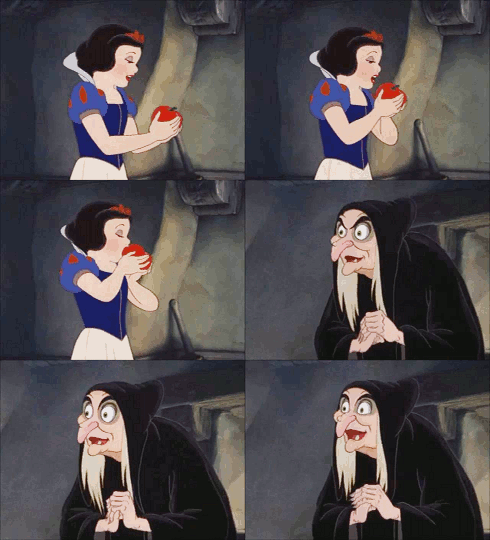
So what do you think of this? Do you think our morality has reduced to use attempting to poison those fortunate? I’ll leave it to you to think :^]
